Poker Quiz! In the Big Blind With K♦6♦ Vs an Early Position Raiser
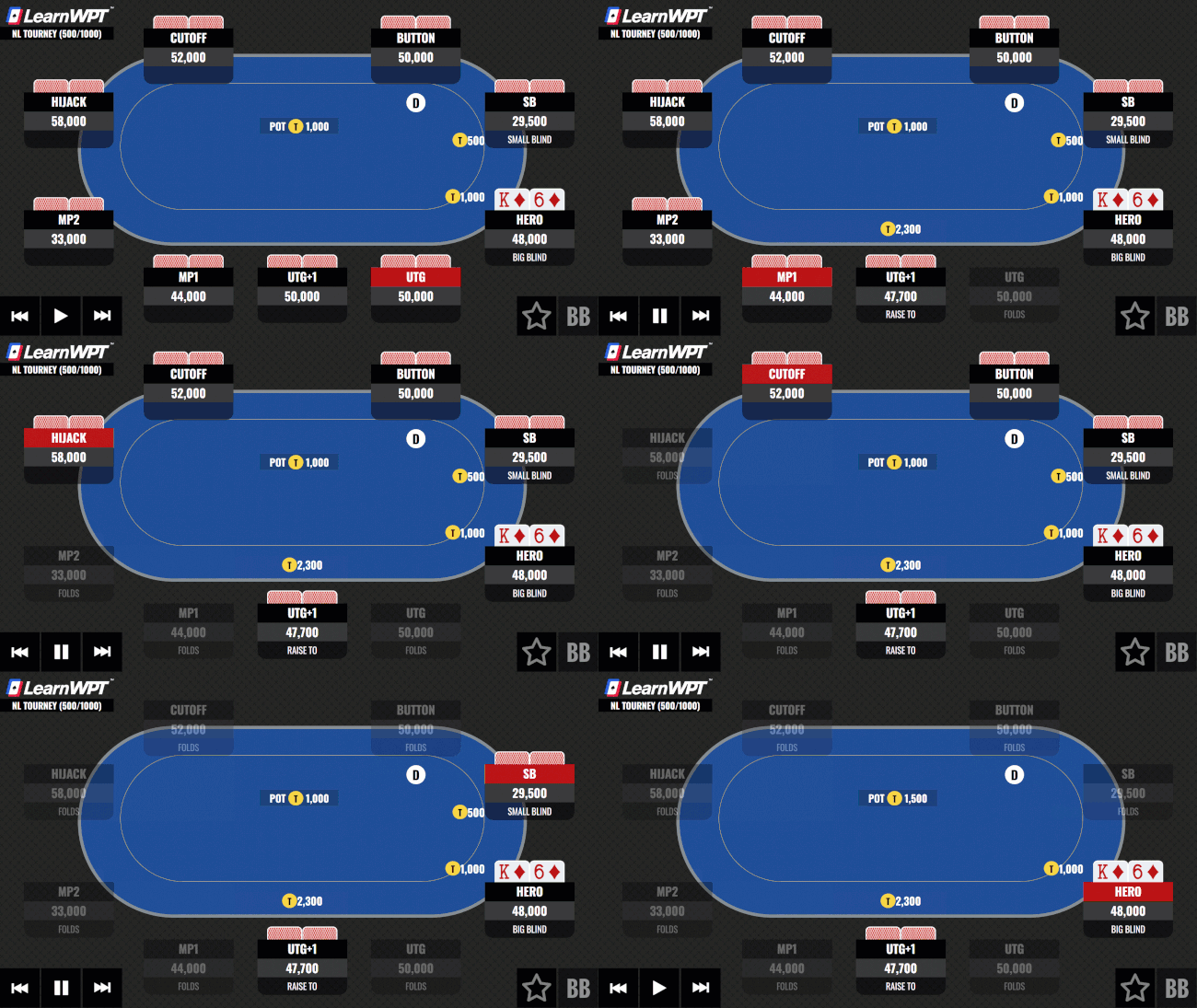
DECISION POINT: You are in the middle stages of a multi-table tournament and most of the chip stacks at your table are between 30-50BBs. The blinds are 500/1,000 with a 1,000 Big Blind Ante. An Early Position player, who you’ve observed to be a good and aggressive player, raises to 2,300. Action folds around to you in the Big Bind with K♦6♦ and a 48BB stack.
What do you do here?
PRO ANSWER: We are playing the middle stages of a multi-table tournament. The blinds are 500/1,000 with a 1,000 Big Blind Ante. The player UTG+1 is a skilled and aggressive player and most of the chip stacks around the table have 30-50 big blinds. We have 48,000 chips remaining after posting the big blind and ante.
We are dealt Kd6d in the Big Blind and UTG folds. UTG+1 makes it 2,300 and everyone else folds to us. We have to call 1,300 more and there is 4,800 in the pot, so we are getting tremendous pot odds to continue.
It’s important to be aware that realizing our equity when out of position becomes much tougher. This positional disadvantage means that even though any two cards might have the required equity of approximately 22% versus the UTG+1 range, we will still be folding a lot of bad offsuit hands that realize their equity poorly.
Continued below ...

A key to profitable Big Blind Defense strategy is not only calling appropriately given the great pot odds, but also defending with an appropriate 3-betting frequency. In the Big Blind this means defending by reraising with a polarized range that includes some of our strongest holdings (QQ+/AK) and some bluffing hands. The combinations we choose to use as bluffs typically want some properties of key card removal.
When consulting the output of a Game Theory Optimal Solver, the preferred 3-betting combinations are hands such as A5s, A4s, and K6s. If we examine K6s in this spot in particular the solver output recommends mixing reraising and calling with this hand, with reraising being preferred at a slightly higher frequency. If we’re never reraising in this spot as a bluff, our entire range will lose value against tougher opponents.
However, as long as we’re not folding and assuming proper play postflop, we will show a profit in the long run by continuing in either manner in this Big Blind Defense scenario.
Reraising and calling are both correct plays.
How would you play it?
Share your answer in the comments below!
Improve Your Game Today!
Join LearnWPT and Get:

- The WPT GTO Trainer to play real solved hands and get instant feedback on YOUR leaks (over 4 BILLION solved spots!)
- On-demand access to our full library of 500+ (and growing) in-depth Strategy Episodes from world-class players
- All of your poker questions answered with the Ask a Pro Feature
- Expert analysis from LearnWPT Pros using The Hand Input Tool
- Downloadable Tools you can use at and away from the tables
- Learn from a Team of world-class Professional Players
To join (just $5 your 1st month) click the JOIN NOW button and start improving your game!
Have Questions about LearnWPT? Email us at [email protected].