Poker Quiz! In Early Position With A♠A♦ Vs the Button ...
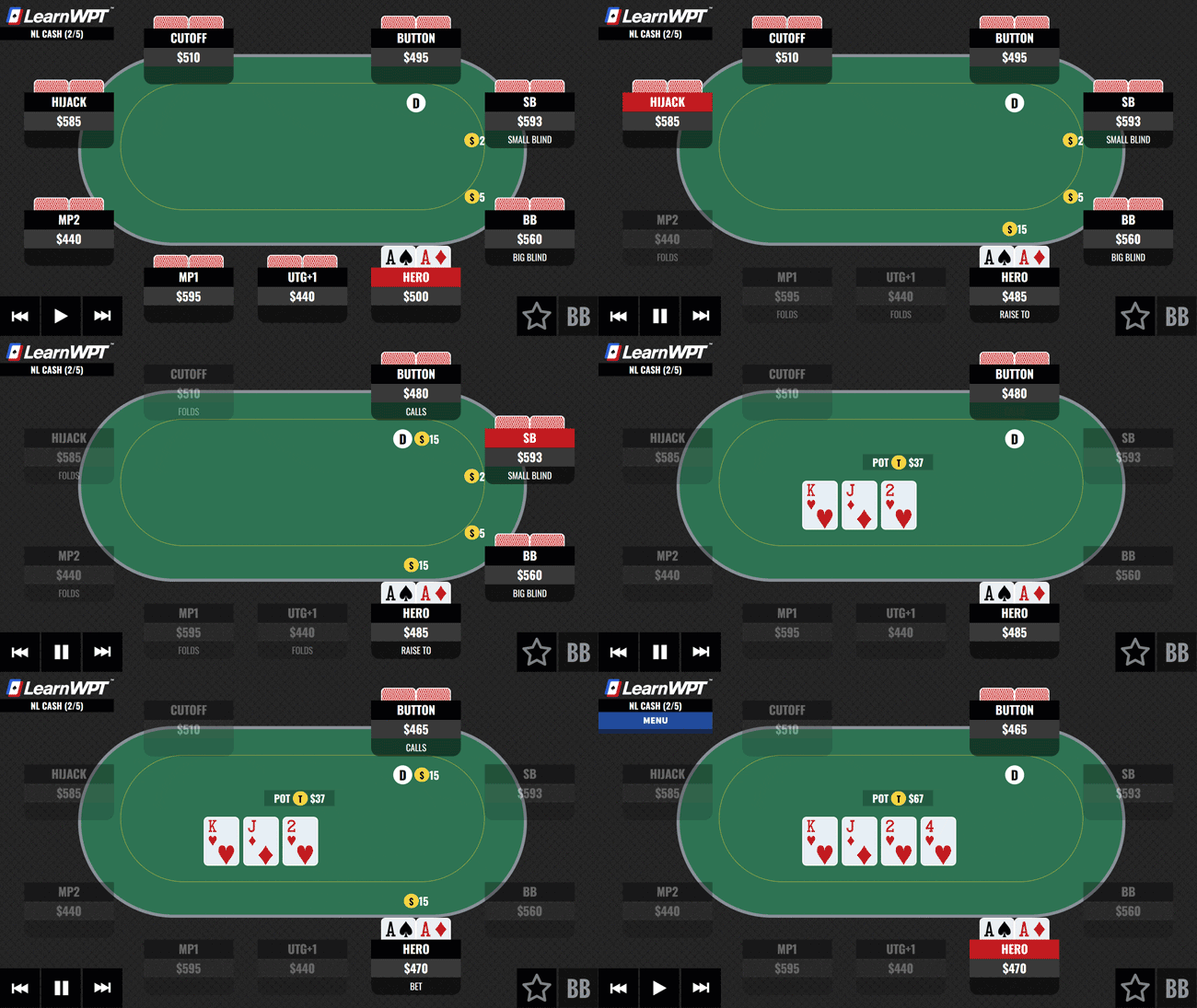
DECISION POINT: Early in a live $2/$5 cash session, stacks are still near the initial $500 buy-in and you have no significant reads on your tablemates. The table has not seen much preflop 3-betting and only a few hands have gone to showdown, with most hands being won through aggressive play on the flop or turn. First to act, you raise to $15 with A♠A♦ and the Button is the only player to call. You continuation bet $15 on the K♥J♦2♥ flop and your opponent calls. The turn card is the 4♥, completing the flush draw, and the action is on you.
What do you do here?
PRO ANSWER: We are playing in a $2/$5 game that has been running less than an hour. Almost all the stacks are still near the $500 initial buy-in and we have no significant reads on our opponents. There is little 3-betting preflop and few hands have been going to showdown postflop, with most being won by aggression on the flop or turn.
We are dealt A♠A♦ Under the Gun (UTG) and make it $15. Everyone folds to the Button who just calls, and both Blinds fold. The K♥J♦2♥ flop actually connects fairly well with the Button preflop calling range as their range is likely to have a lot of suited broadway hands as well as some pairs and suited connectors. This means that our range as a whole prefers to do a fair amount of checking (a solver checks about 50% of the time), but our particular hand is quite strong and can get a lot of value from weaker Kx/Jx hands as well as draws.
A temptation many players have here is to bet quite large to try and price the draws out. The main issue with that approach is that players who call on the Button with suited cards are unlikely to fold to any reasonably sized bet when they flop a draw. There are so many dynamic turn cards possible so we are much better off betting smaller and getting value from weaker Kx/Jx hands right now on the flop, then reevaluating based on the specific texture resulting from any of the various turn/river cards.
We decide to bet $15, and our opponent calls. The turn is the 4♥, completing the flush draw. Again, many players are tempted to bet quite large with their overpairs on these types of turn cards to attempt to charge one-card draws.
Continued below...

The problem we run into on this dynamic of a board is that as we bet larger, we start to induce folds from all the hands we beat and only get called by either hands that beat us or have very significant equity against us. Additionally, we stated that players are 3-betting preflop less which means their calling range includes some stronger hands like JJ that might not exist as often against players who 3-bet more appropriately. Since most hands are ending on the flop and the turn the Button’s calling range on both those streets is likely to be stronger.
Both betting and checking on this particular turn card can be quite appropriate, however we need to make sure we don’t bet too much when we do decide to bet. After running this hand in a solver, we see that as our bet size starts to get over half pot our EV starts to drop significantly. If the game included more passive calling stations, we could consider exploitatively betting much larger (both on the flop and turn) to maximize value against wider ranges.
Betting (up to half the pot) and checking are both correct plays.
How would you play it?
Share your answer in the comments below!
Start Playing Better Poker With LearnWPT
Whether you’re brand-new to poker training or are an experienced student, a Membership to LearnWPT.com is your chance to learn from world-class professional poker players in a friendly community using state-of-the-art tools.
Join now to get started, and you'll immediately gain access to the LearnWPT training features, including WPT GTO Trainer packs, 550+ strategy videos, downloadable tools, Ask a Pro Discord, and more!
Have Questions about LearnWPT? Send an email to our Support Team at [email protected] or click the red CONTACT US button.