Poker Quiz! Flopped the Nut Flush Draw With A♦4♦...
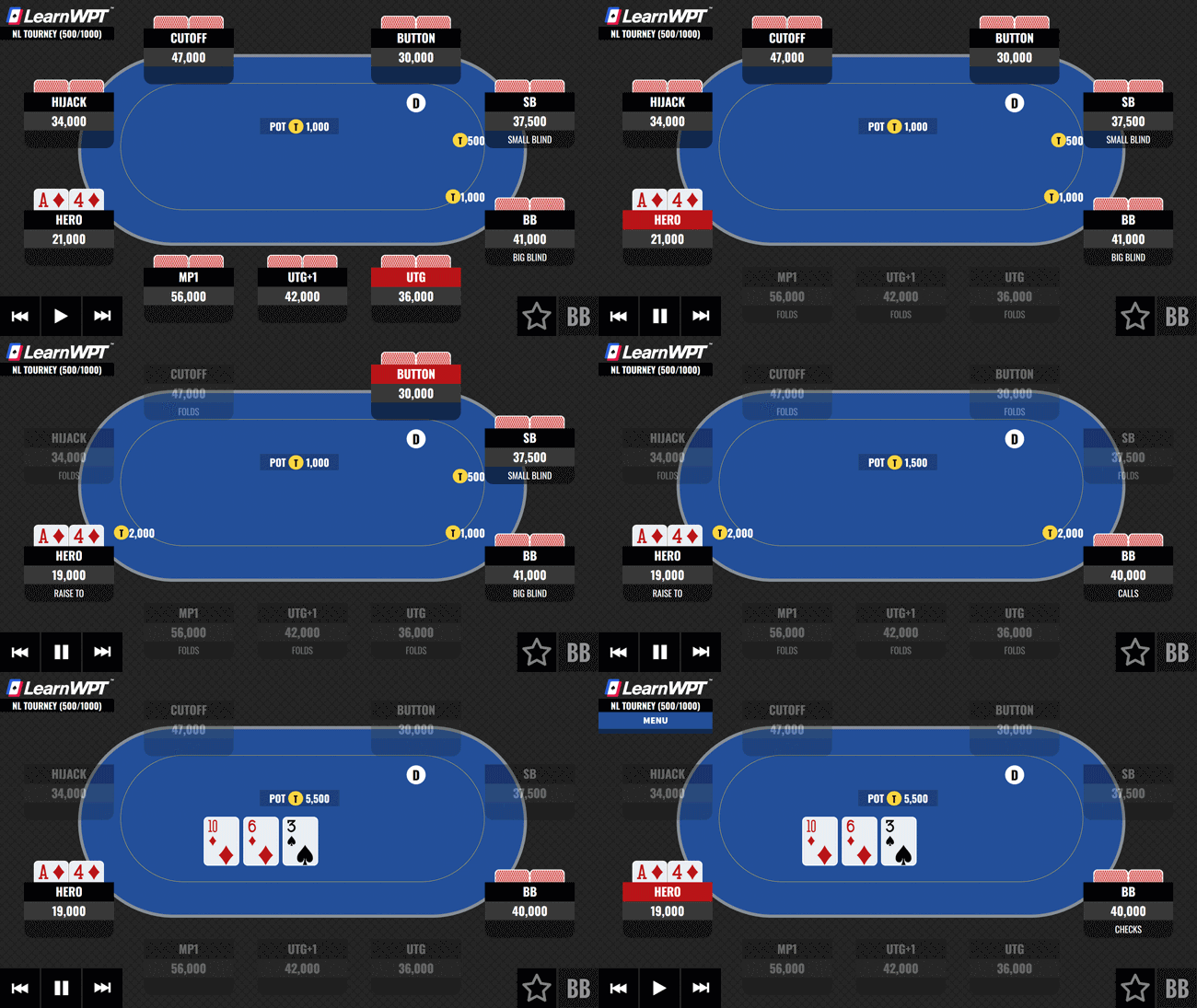
DECISION POINT: You're in the middle of a daily tournament with blinds at 500/1,000 and a 1,000 big blind ante. There are 50 players remaining with 18 getting paid, and you are the shortest stack at your table with just over 20BBs. Action folds to you in the MP2 seat with A♦4♦ and you min-raise to 2,000. Everyone folds to the Big Blind, who you’ve observed as playing relatively straightforward and mostly fit or fold postflop, and they call. The flop comes T♦6♦3♠, giving you the nut flush draw. Your opponent checks and action is on you. What's your move here?
PRO ANSWER: We are in the middle stages of a daily tournament. There are around 50 players remaining and 18 get paid. Our opponent in the Big Blind has been playing relatively straightforward and mostly fit or fold postflop. Blinds are 500/1,000 with a big blind ante and we are the shortest stack remaining at our table with just over 20 big blinds. We are dealt A♦4♦ in MP2 and everyone folds to us.
A4s is near the bottom of our standard first-in opening range from middle position, but it’s still a profitable open, so we make a standard raise to 2,000 chips. Everyone folds to the Big Blind who just calls. The flop is T♦6♦3♠. We flop the ace-high flush draw and the Big Blind checks to us.
This is a spot where there are very few actions we can take that would be classified as a “mistake,” although moving all-in seems the least desirable. Shoving this flop creates a scenario where our opponent is only likely to call when well ahead and will fold a lot of hands that would have folded to a smaller bet anyway.
Checking with a solver after the fact confirms this. The output recommends a mix of some checking, small betting of around 25% of the pot, and some larger betting around 50% of the pot.
When a decision is relatively close like this, one question we can ask to help is, “Which line makes it least likely we will make a mistake and most likely our opponent will make a mistake?” If we check behind and miss the turn, which will be around 75% of the time, our opponent can bet big to target our capped range and we will be in a tricky spot and potentially be forced to fold the best hand or give up with significant equity.
If we decide to bet small, the Big Blind is supposed to continue quite wide, and even opponents who play fairly straightforward such as this one, might find calls with 3x combos or some ace-high hands. In scenarios when we use a larger c-bet size, our opponent is still supposed to continue with 3x and hands as weak as AJo, according to the solver output. Considering all these factors, it is least likely that our straightforward opponent will find the continues they should versus the larger bet sizing.
While checking, betting small, and betting big can all be acceptable sizes, against this particular opponent, the best choice is to bet the larger non all-in sizing of half pot.
Betting half pot is the best play.
How would you play it?
Share your answer in the comments below!
Start Playing Better Poker With LearnWPT
Whether you’re brand-new to poker training or are an experienced student, a Membership to LearnWPT.com is your chance to learn from world-class professional poker players in a friendly community using state-of-the-art tools.
Join now to get started, and you'll immediately gain access to the LearnWPT training features, including WPT GTO Trainer packs, 550+ strategy videos, downloadable tools, Ask a Pro Discord, and more!
Have Questions about LearnWPT? Send an email to our Support Team at [email protected] or click the red CONTACT US button.